
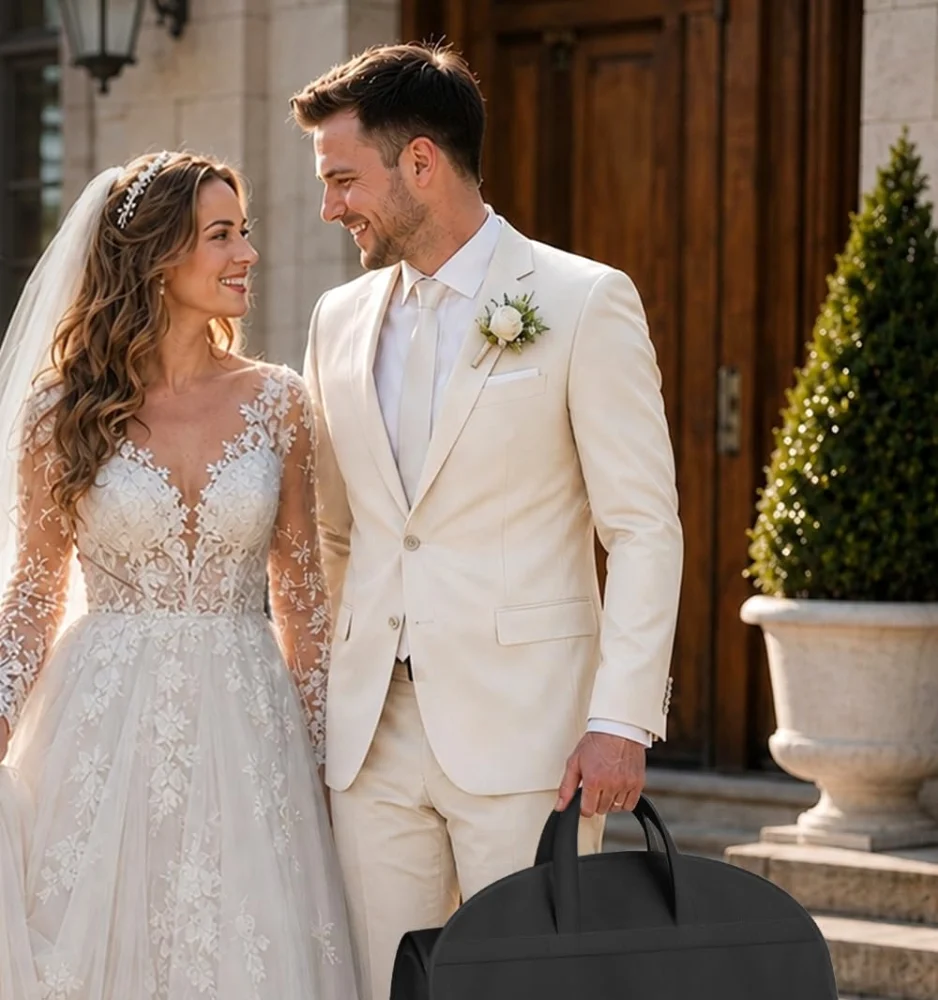
A wedding dress gets stored twice. The first time is for a few days or weeks: it arrives from the shop, waits in a closet, travels to the venue and comes home again. The second time is for years, and the advice for that second stretch is different. Most of what goes wrong with a stored dress comes from treating the two the same way.
The weeks around the wedding
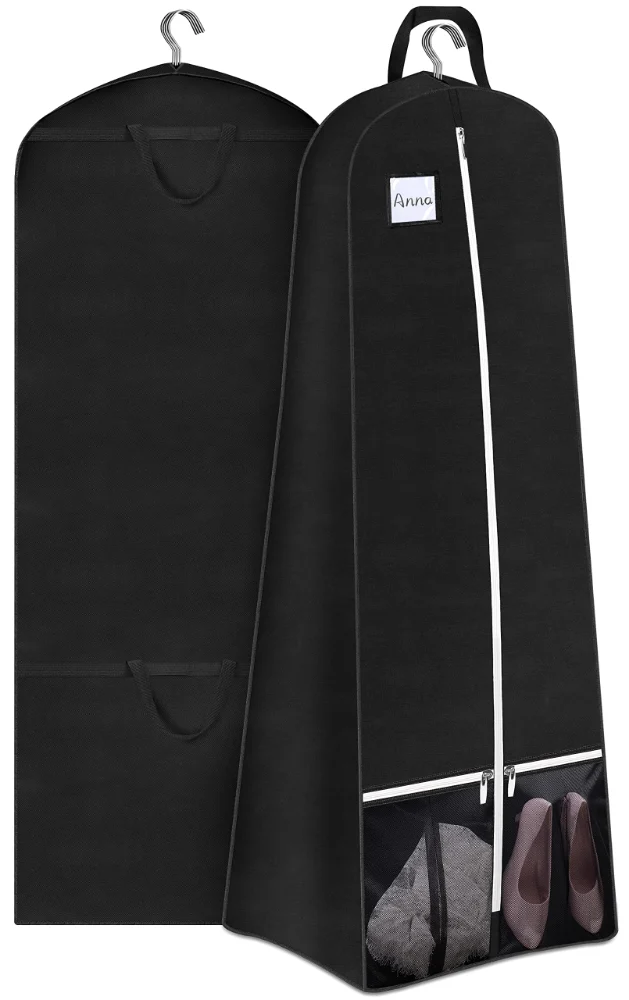
Before the wedding, the dress needs three things: room for the skirt, protection from dust and snags, and a way to move it without dragging the hem. Hang it on the padded hanger it came on, at a height where the train clears the floor.
Measure the dress on its hanger from the hook to the lowest point of the hem, then choose a garment bag a few inches longer. A slim sheath fits a 65 or 70-inch bag. A full skirt or a train needs length and a deep gusset, the fold that gives a bag its depth. Our 72-inch gown bag has a 15-inch gusset for that reason.
Pack the small things with the dress rather than in a separate box. Shoes, the veil and a hair piece can ride in the pockets of the bag, so nothing is left behind on the morning.
Carrying it to the venue
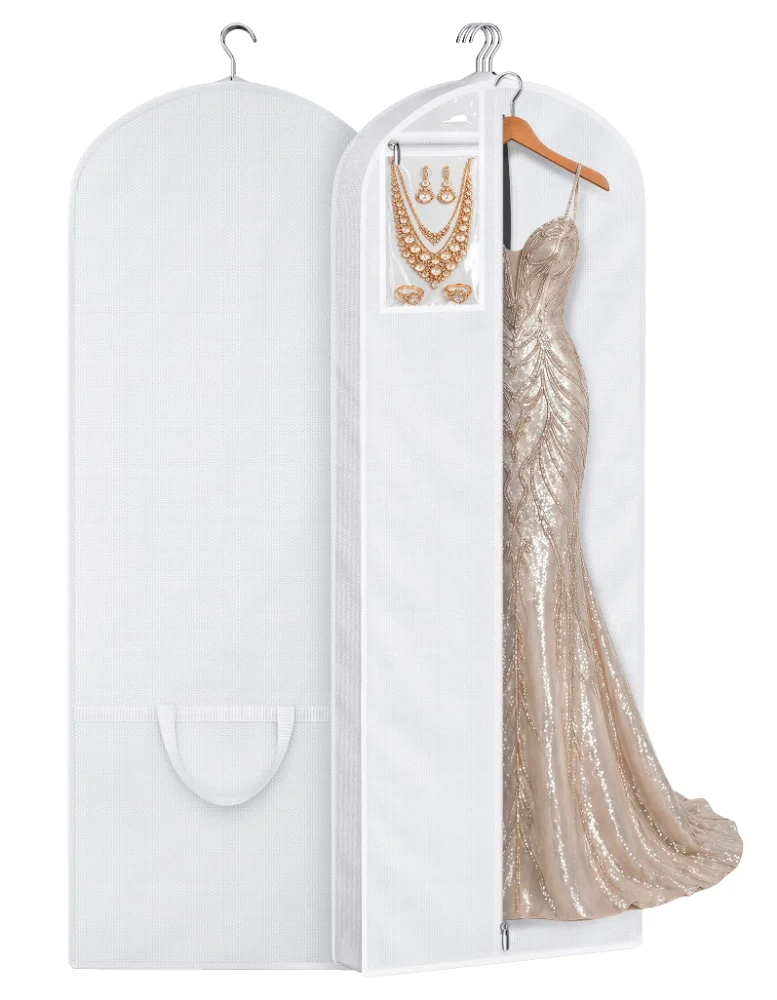
Fold a long bag in three only for the car and the walk inside, and hang it again as soon as you arrive. Carry it by both handles so the weight of the skirt is not hanging from the shoulders of the dress. In a hotel room, hang the bag on the back of a door or a closet rod, away from a window.
After the wedding
Get the dress cleaned before it goes anywhere for long. University of Kentucky Extension counts the wedding dress among textile heirlooms and lists the things that damage stored fabric: light, heat, high humidity, dust, insects, and a sealed space that traps moisture. Stains that look invisible now can darken with time, so tell the cleaner about anything that was spilled on the day.
Storing it for years
Here the advice turns away from the closet. The National Park Service advises storing heavy or heavily embellished garments flat rather than on a hanger, because a hanging dress puts its weight on the shoulders and the bodice. Most wedding dresses with a full skirt, beading or lace fall into that group.
If you store it flat, pad the folds with washed cotton muslin or clean white sheets so they do not crease sharply, and refold along new lines every so often. University of Kentucky Extension suggests exactly that, and it advises avoiding plastic bags completely, because some plastics give off harmful by-products as they age.
If you decide to hang it, use a well-padded hanger, support a heavy skirt so the shoulders do not carry it, and cover the dress with fabric rather than plastic. Conservators prefer washed muslin. A fabric gown bag is closer to that advice than a clear plastic cover, but it is not the same thing as a muslin wrap.
Where to keep it
Choose a closet in the living part of the house. The Smithsonian advises keeping stored textiles clean, dark and cool, and not sealing them in airtight plastic, because trapped moisture can condense on the fabric. That rules out an attic that bakes in summer and a basement that stays damp.
- Keep it away from exterior walls and heating vents.
- Keep it out of direct light, including the light from a closet window.
- Take it out once a year, look it over for spots or pests, and refold it.
Which of our bags fits which job
| Job | What to use | Why |
|---|---|---|
| The weeks before the wedding | 72-inch gown bag, 15-inch gusset | Room for the skirt and pockets for shoes and a veil |
| A slimmer dress, or a bridesmaid dress | 70-inch bag with 3 pockets | An 8-inch gusset and a clear pocket for jewelry |
| Several long dresses for one event | 70-inch Oxford gown bag | Holds four to six long dresses, or one wedding dress |
| Years of storage | Flat, in muslin, in a cool dark closet | What the extension services and museums advise |
For the wedding itself, any of our gown bags keeps dust off and makes the dress easy to carry. For the decades after, follow the people who look after museum collections, and let the bag go back to carrying the next dress.