
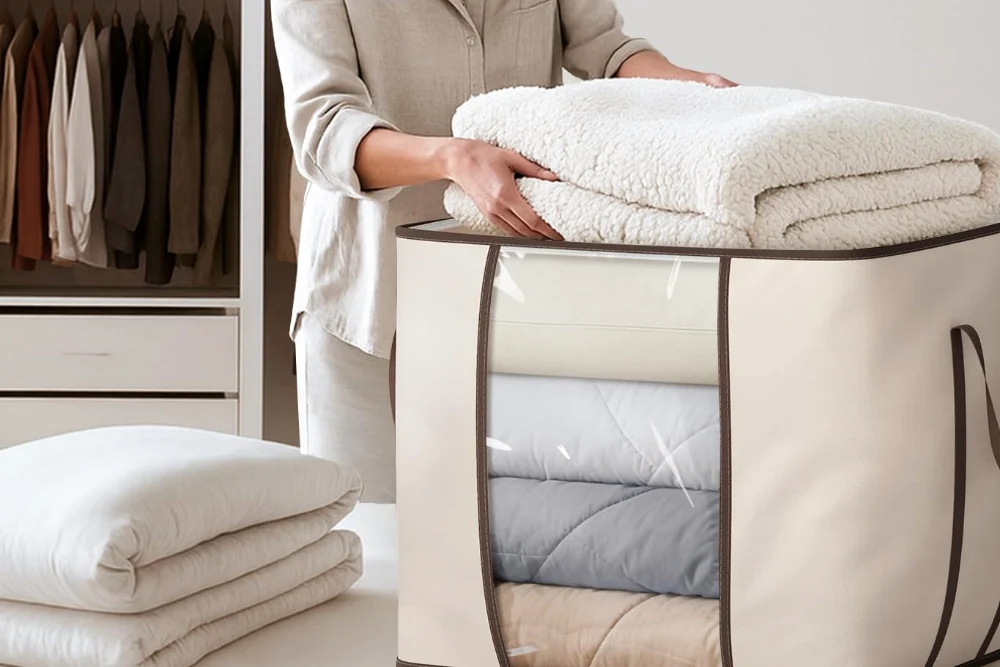
The spring pack-away is the one job in a closet that decides how the autumn goes. Done in an afternoon, it gives you back a rail and a shelf. Done in a rush, it gives you a sweater with holes in October and a comforter that smells of the basement.
Wash everything first
Start at the washing machine, not the closet. University of Kentucky entomologists advise cleaning woolens before long storage, and UC IPM notes that food and perspiration residues attract carpet beetles. A sweater that looks clean after one wear can still carry enough of both to draw them.
Dry cleaning counts, and so does a hot wash for anything the label allows. Let everything dry completely before it goes into a bag. Fabric packed damp is how mildew gets started.
Decide what hangs and what folds
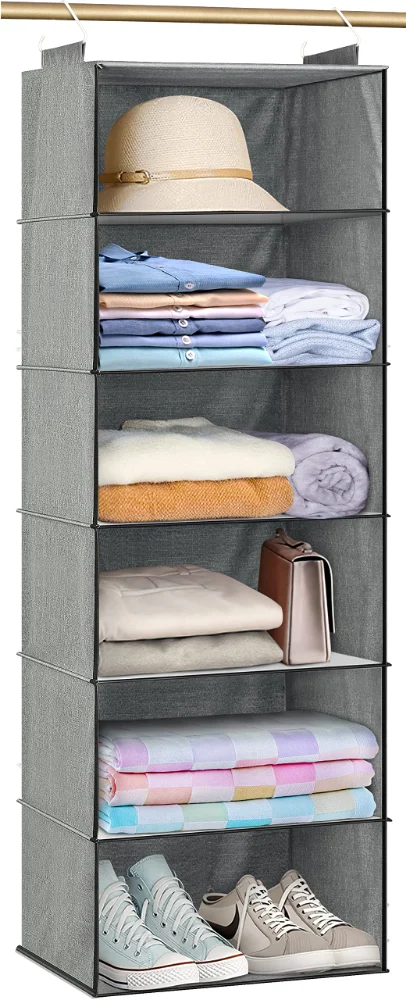
Coats, blazers and tailored jackets can stay on hangers. Knits cannot. The National Park Service advises storing knits, bias-cut pieces and heavily embellished garments flat, because a hanger pulls a knit out of shape over months.
- Hang: wool coats, blazers, rain jackets, tailored trousers.
- Fold: sweaters, cardigans, knit dresses, fleece.
- Pack: comforters, duvets, throws, spare pillows.
The folded pile can go onto the shelves of a hanging organizer, which keeps knits flat and off the closet floor. Ours has six shelves, each 14.6 inches wide, and hangs from the rod you already have.
Cover the coats
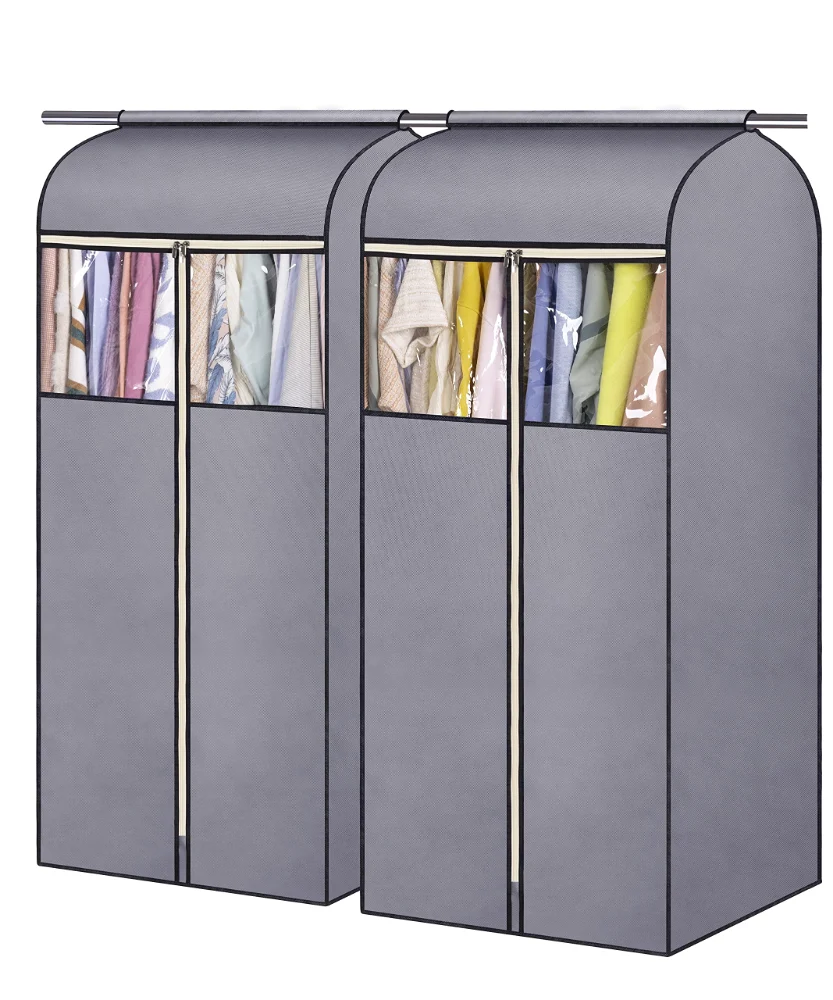
A garment bag keeps dust off the shoulders of a coat, which is where it settles first, and keeps a wool coat from rubbing against its neighbor every time the door opens. National Park Service conservators use covers for exactly those reasons.
Pick a bag long enough to cover the hem, and do not pack the rail so tight that the bags press against each other. The Smithsonian advises against sealing textiles in airtight plastic, so leave clear covers for coats you will wear again in a few months.
Pack the bedding
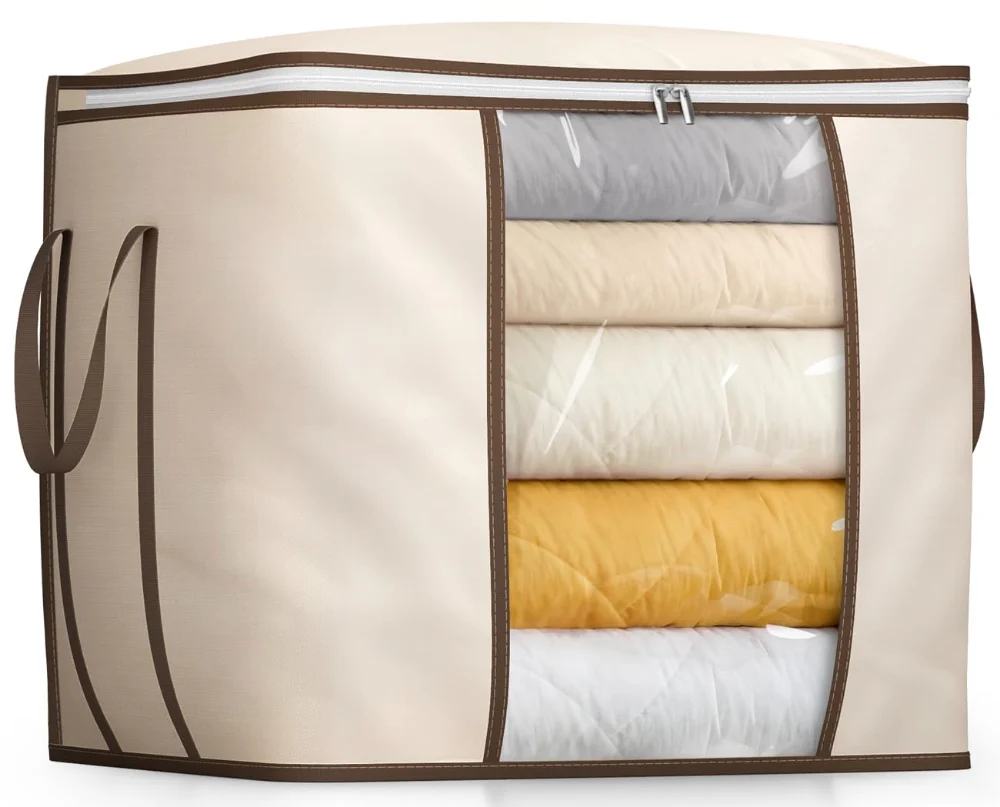
A king comforter fills a 120-liter bag. A bulky duvet, or several quilts, wants our 170-liter bag, which also has a window so you can tell the flannel sheets from the down comforter without unzipping both.
Fold bedding loosely rather than forcing it in, and keep the heaviest bag on the lowest shelf. The handles on our 170-liter bag are rated to 50 lb, and a shelf above your head is still the wrong place for the heaviest one.
About moths, cedar and mothballs
No storage bag keeps moths away on its own, ours included. What the entomologists recommend is the order above: clean first, then pack in tight-fitting bags or containers. University of Kentucky entomologists add that cedar closets seldom stop clothes moths by themselves.
If you use mothballs, keep them from touching plastic. UC IPM warns that they can soften plastic garment bags onto the fabric inside. Follow the label, and keep them where children and pets cannot get to them.
Where it all goes
Pick the coolest, driest closet in the house. An attic swings between hot and cold, and a basement tends to stay damp. The Smithsonian points stored textiles toward a spot that is clean, dark and cool.
| What | How | Where |
|---|---|---|
| Wool coats and blazers | On hangers, in closed garment bags | The back of a closet rod |
| Sweaters and knits | Folded flat on organizer shelves | Hanging from the same rod |
| Comforters and duvets | In fabric bags with windows | A low shelf or under a bed |
| Everything | Clean and fully dry | Cool, dry and out of the light |
Checking in
Put a reminder in your calendar for the middle of summer. UC IPM suggests checking stored woolens and linens about once a year for signs of carpet beetles. Open the bags, look along the folds and seams, and refold anything that has been in the same shape for months.