
A rolling clothing rack does one thing well: it adds hanging space where a closet cannot. It does that job for years if you respect two numbers, the load limit and the height, and it becomes a nuisance if you treat it like a closet with wheels.
Start with the load limit
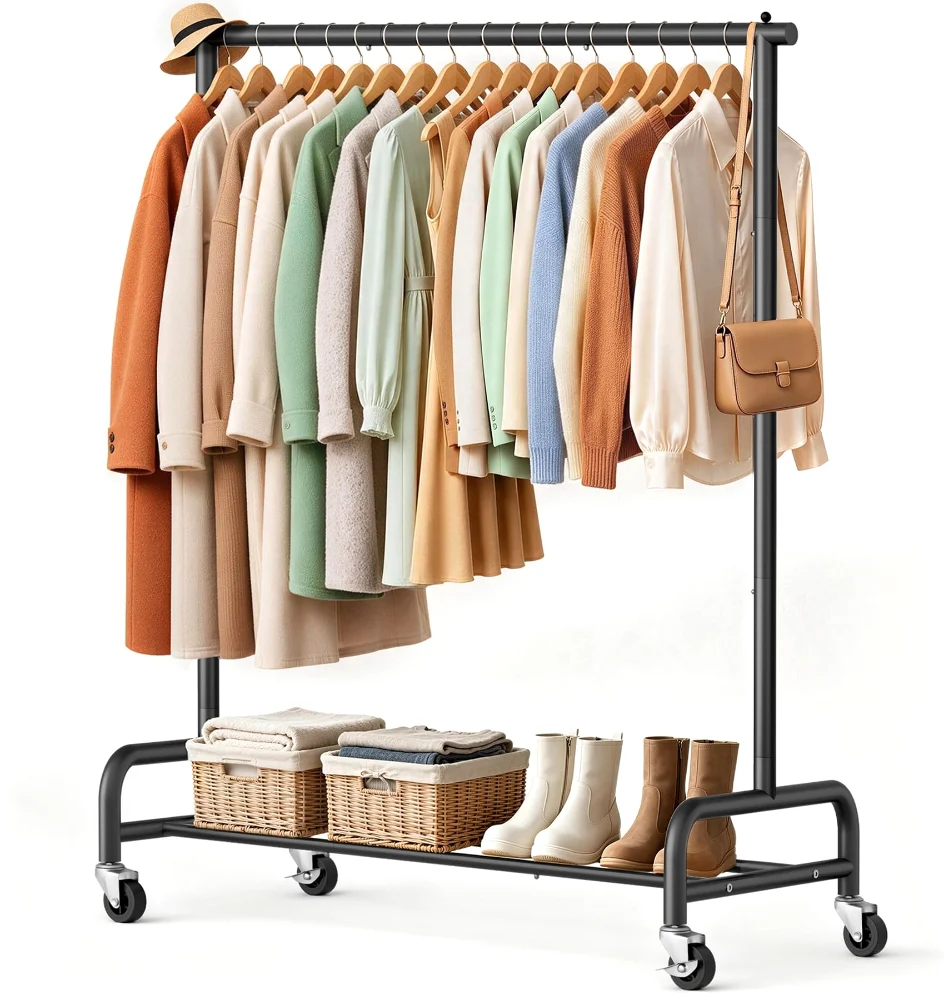
Most of our racks carry a printed load limit, and the two that do not are the slim rack and the double rod rack with fabric shelves. The limits run from 50 lb on the kids rack through 120 lb on the compact and small racks and 150 lb on the 43-inch rolling rack, up to 200 lb on the rack with a base shelf and on the double rod rack.
A load limit is easier to picture as coats. Our 43-inch rack takes about 30 winter coats or 50 shirts. The double rod rack takes about 60 coats across its two rails. If your coats are heavy wool or down, count fewer.
Load it evenly
- Hang the heaviest pieces near the middle of the rail, not at one end.
- On a double rod rack, keep the heavier clothes on the lower rail.
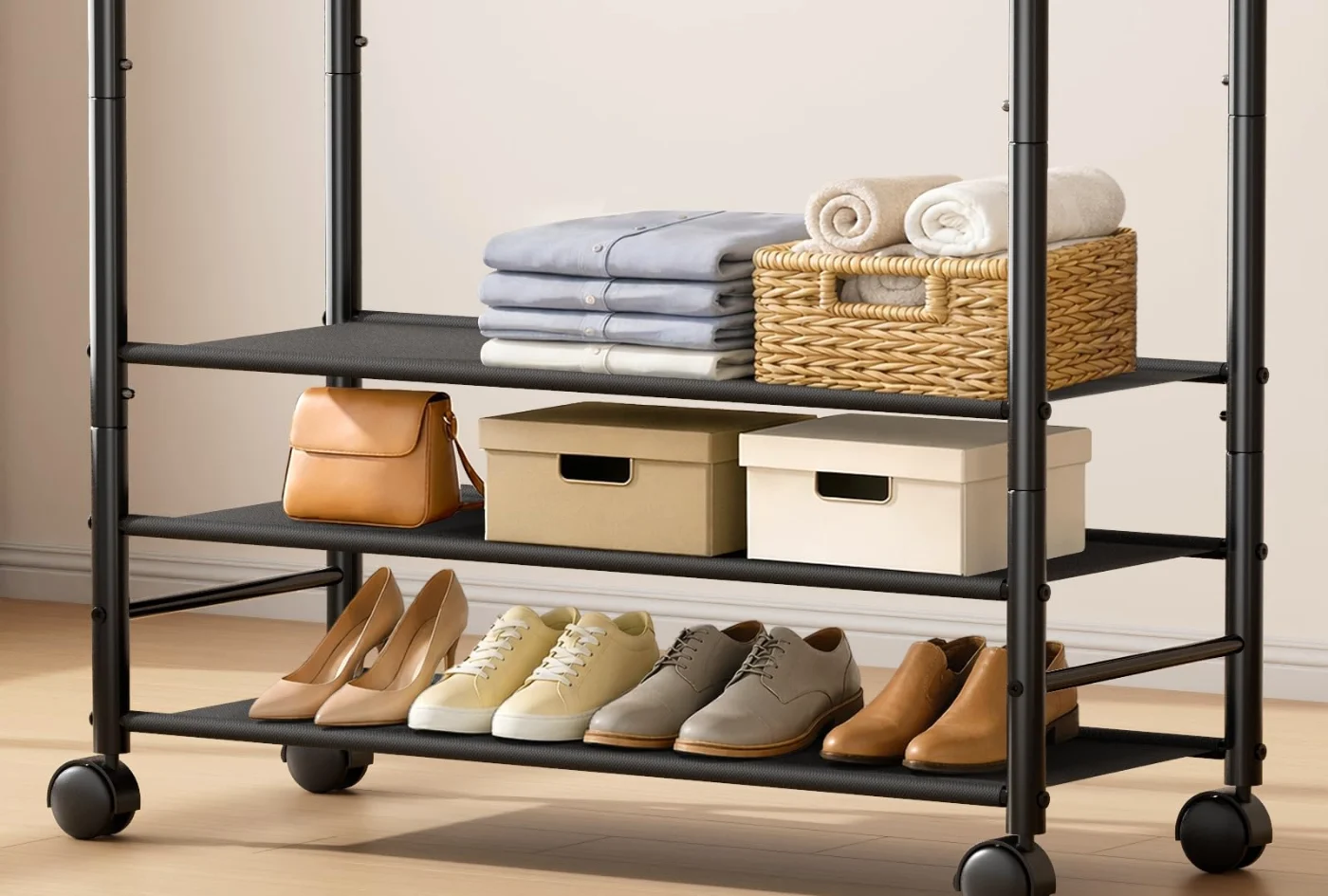
- Put shoes and boxes on the base shelf, where the weight sits low.
- Leave a little space between hangers so the rail is not forced to bow.
Lock the wheels
Most of our rolling racks lock on two of their wheels. Lock them whenever a loaded rack is standing still, and release them only to move it. Push a rack from its frame near the base rather than pulling it by the rail, and empty it before you roll it over a threshold or a rug edge.
Mind the height
Our racks stand from 45 inches, for the kids rack, to 77 inches, for the double rod rack, measured to the base. Check a sloped ceiling or an attic beam before you order, and remember that a full rail makes the rack harder to turn in a tight room.
Keep the clothes on it in good shape
A rack puts the clothes out in the room, where dust and light reach them. National Park Service conservators use covers to keep dust and light off hanging garments. A garment bag over the coats you are not wearing this month does the same job at home.
Hang only what hangs well. Coats and tailored jackets are fine on a rail. Knits and heavy, beaded pieces are better folded, so a rack with shelves at the base is useful for the sweaters that come with a coat.
A rack in a child’s room
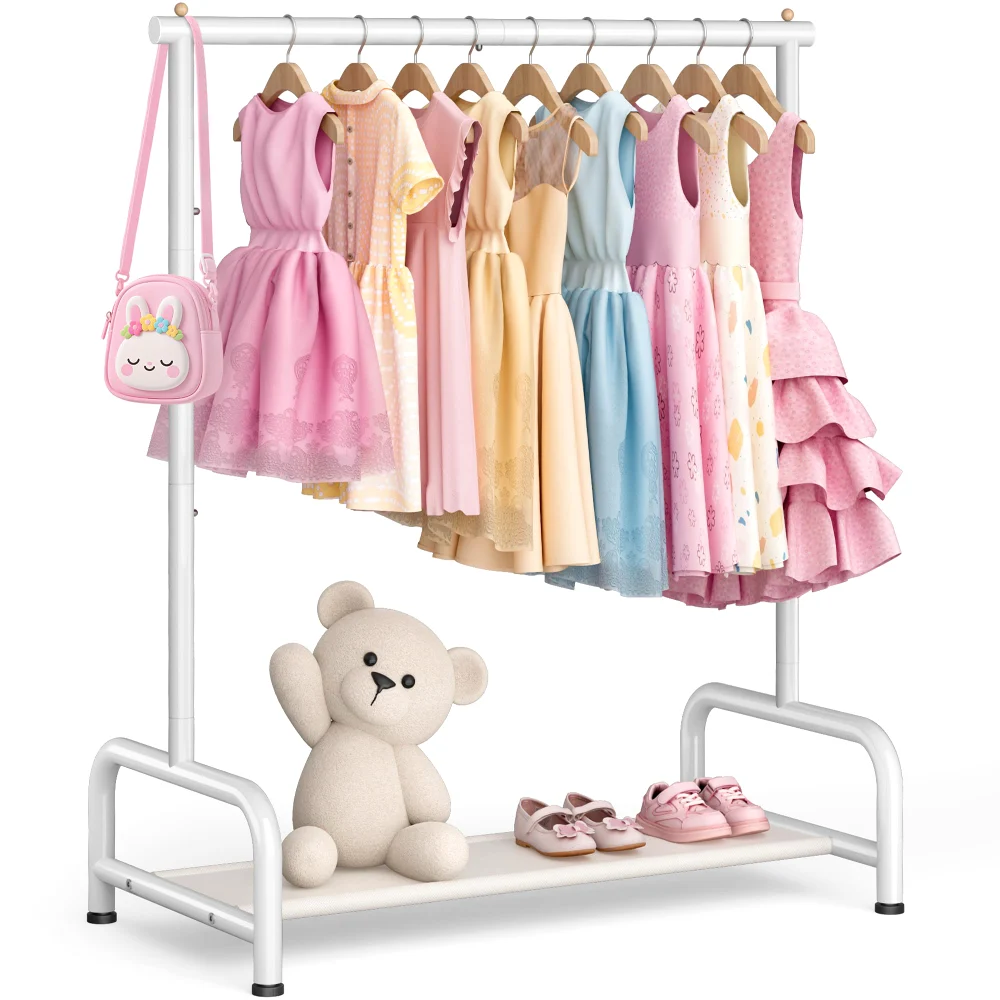
Sleeping Lamb Kids Clothing Rack with Bottom Shelf
Holds 50 lb · 32" W x 45" H · 2 options
From $23.37A low rack gives a child a place to hang their own coat and pick out a costume. Our kids rack is 45 inches tall, 32 inches wide and 12 inches deep, with a canvas shelf at the bottom.
The federal tip-over rule written after the STURDY Act covers clothing storage units, meaning free-standing bedroom furniture with drawers or doors, such as dressers and armoires. A rack has neither, so that rule is not the one to look for. The safety habits behind it still apply to anything a child can pull on.
- Set the rack against a wall rather than in the middle of the room.
- Keep toys and favorite things off anything a child might climb to reach, as the Consumer Product Safety Commission advises for furniture.
- Keep plastic garment bags, including dance costume bags, out of a small child’s reach. MedlinePlus advises keeping plastic bags away from children.
- Stay under the 50 lb limit, and check the base now and then as the child grows.
Choosing between our racks
| Rack | Width | Height | Load limit |
|---|---|---|---|
| Kids clothing rack | 32" | 45" | 50 lb |
| Compact rolling rack | 31.5" | 56" | 120 lb |
| 43-inch rolling garment rack | 43" | 63" | 150 lb |
| Rack with base shelf | 43" | 66" | 200 lb |
| Double rod rack | 40" | 77" | 200 lb |
The rest of the range, including the slim racks and the double rod rack with fabric shelves, is on the clothing racks shelf with the same figures printed for each.